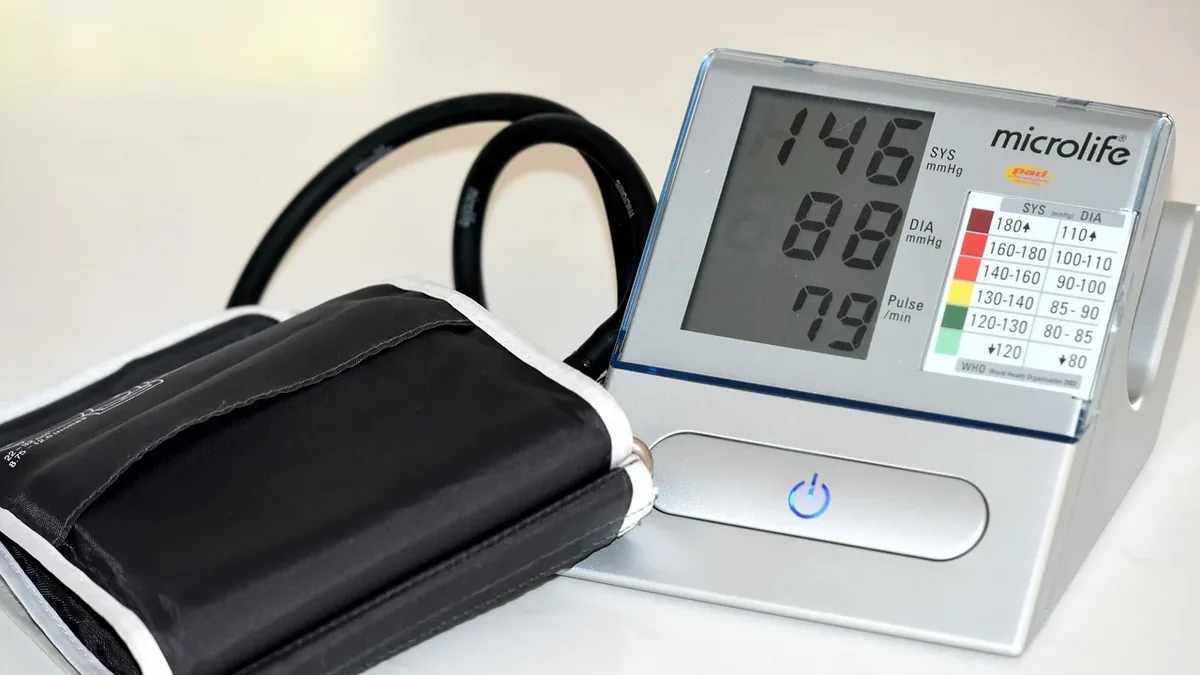
Blood Pressure Monitors And Validated Device Lists
| Device type | Upper arm, wrist, or finger |
|---|---|
| Measurement method | Oscillometric or auscultatory |
| Cuff size | Varies (e.g., small, standard, large) |
| Validation standard | Typically AAMI/ISO 81060-2 or ESH IP |
| Validation status | Validated, non-validated, or pending |
| Frequency of use | Varies (e.g., daily, weekly, situational) |
| Data recording | Manual log, built-in memory, or Bluetooth sync |
Origin and history
The clinical measurement of blood pressure began in the late 19th century with the invention of the sphygmomanometer. Early devices, like the mercury column sphygmomanometer pioneered by Scipione Riva-Rocci in Italy in the 1890s, required a clinician to listen for sounds through a stethoscope. The development of automated, electronic blood pressure monitors for home use began in the latter half of the 20th century, primarily in Japan and the United States, as digital technology advanced. The concept of validated device lists emerged in the 1990s and early 2000s as a direct response to the proliferation of consumer-grade monitors with varying and often unverified accuracy. Medical bodies recognized that inaccurate readings could lead to misdiagnosis and inappropriate treatment, creating a need for independent testing. These validation protocols and the resulting lists were established by professional hypertension societies and standardization organizations to provide a benchmark for device reliability.
What it is for
Blood pressure monitors are for the objective measurement of arterial pressure, providing critical data for managing cardiovascular health. Their primary purpose is to enable the detection and monitoring of hypertension, a major risk factor for heart attack, stroke, and kidney disease. Within a daily practice focused on movement, recovery, food, and stress, they serve as a key feedback tool, showing how the body physiologically responds to lifestyle interventions. Regular monitoring can reveal how specific dietary choices, stress management techniques, or recovery protocols directly impact blood pressure readings over time. Validated device lists exist solely to guide consumers and clinicians toward monitors that have passed rigorous scientific testing for accuracy and consistency. Using a validated device ensures that the data informing health decisions is trustworthy, preventing actions based on misleading information from a poor-quality instrument.
Overview
A modern home blood pressure monitor typically consists of an inflatable cuff, a pump, a pressure sensor, and a digital display unit. These devices operate using the oscillometric method, which detects vibrations in the artery under the cuff to estimate systolic and diastolic pressure, rather than relying on the user's ability to hear Korotkoff sounds. Validated device lists are published by authoritative organizations such as the American Medical Association, the British and Irish Hypertension Society, and the European Society of Hypertension. These lists are compiled after devices undergo standardized testing protocols, often comparing their readings against those taken by a mercury sphygmomanometer or another gold-standard reference device in a controlled clinical setting. It is crucial to understand that validation is specific to a monitor's model and cuff size, and a listing does not guarantee accuracy for every individual user without proper technique. The landscape of these lists is dynamic, with new models being added and older ones sometimes removed as standards evolve.
What to know
You must use a monitor with a cuff that correctly fits your arm circumference, as an ill-fitting cuff is the most common source of inaccurate readings. Position is critical: sit quietly with back supported, feet flat on the floor, and the cuff at heart level on a bare arm for at least five minutes before taking a reading. Validated lists are not all-encompassing; many devices on the market, including some from well-known brands, have not undergone or passed independent validation. Validation typically applies to a specific model number, so a brand name alone is insufficient, you must check the exact model against the list. Even with a validated device, readings should be taken consistently at the same time each day, such as morning and evening, and multiple readings should be averaged for a reliable picture. It is recommended to bring your home monitor to a doctor's appointment annually to check its calibration against the clinic's equipment, as accuracy can drift over time.
Common questions
A common question is whether wrist monitors are as accurate as upper-arm monitors, and the general consensus from medical guidelines is that upper-arm monitors are preferred due to greater reliability. People often ask which validation list is the best to follow, and while regional lists exist, choosing a device validated by any major hypertension society is a sound approach. Many wonder if a more expensive monitor is inherently more accurate, but price does not guarantee validation, and several affordable models appear on official lists. Users frequently question why their home readings differ from those taken in a clinic, a phenomenon known as "white coat hypertension" or "masked hypertension," which underscores the value of home monitoring. Another frequent inquiry is about how often to check blood pressure, which depends on individual circumstances but is often once or twice daily when first establishing a baseline or adjusting treatment. Individuals also ask if smart phone apps that claim to measure blood pressure without a cuff are valid, and currently, no such technology has received validation from major medical bodies for clinical accuracy.
Pros and cons
The primary pro of using a validated home blood pressure monitor is obtaining reliable, objective data that empowers better management of cardiovascular health within a daily practice. It demystifies the impact of lifestyle factors, allowing you to see concrete correlations between stress, diet, recovery, and your physiology. A significant con is that the process can induce anxiety or obsessive behavior in some individuals, leading to "white coat syndrome" at home and frequent, unnecessary testing that increases stress. A common mistake is purchasing a convenient-looking wrist monitor or a well-advertised brand without checking validation lists, resulting in persistent doubts about the data's accuracy. Many people regret choosing a device with a complicated interface or a cuff that is difficult to self-apply, which leads to poor technique and eventual disuse. Furthermore, relying solely on the device without maintaining a log or understanding the natural variability of blood pressure can lead to misinterpretation of single, out-of-context readings.
Who it suits
This practice suits individuals diagnosed with hypertension or prehypertension who are actively managing their condition through lifestyle changes and need to track progress. It is well-suited for those who experience "white coat syndrome" in clinical settings, as home monitoring provides a more realistic picture of their typical blood pressure. People engaged in a structured daily practice focusing on movement, recovery, nutrition, and stress management will find it a valuable biofeedback tool to assess the efficacy of their interventions. It suits detail-oriented individuals who are comfortable with routine, consistent measurement protocols and who will not be unduly anxious from seeing numerical fluctuations. The practice is less suitable for individuals with severe arrhythmias like atrial fibrillation, as many automated monitors are not validated for such conditions and may produce unreliable readings. It is also a poor fit for anyone seeking a one-time diagnostic tool without a commitment to ongoing monitoring or without the intention to discuss results with a healthcare professional.
Latest Blood Pressure Monitors And Validated Device Lists news
Latest reporting
Blood Flow Restriction Matches High-Load Exercise
A 2026 meta-analysis in the British Journal of Sports Medicine finds low-load blood flow restriction (BFR) training provides muscle strength, pain...

Filter newsletter tests five niche sleep
The Guardian's Filter newsletter has tested five niche sleep products, including a blackout tent, a Bluetooth sleep mask, a climate-controlled bed...

Weekend Lie-Ins May Lower Blood Pressure
A study suggests moderate weekend catch-up sleep, ideally about 1.5 hours extra, is linked to a 6% lower chance of high blood pressure.