Oura Ring
Origin and history
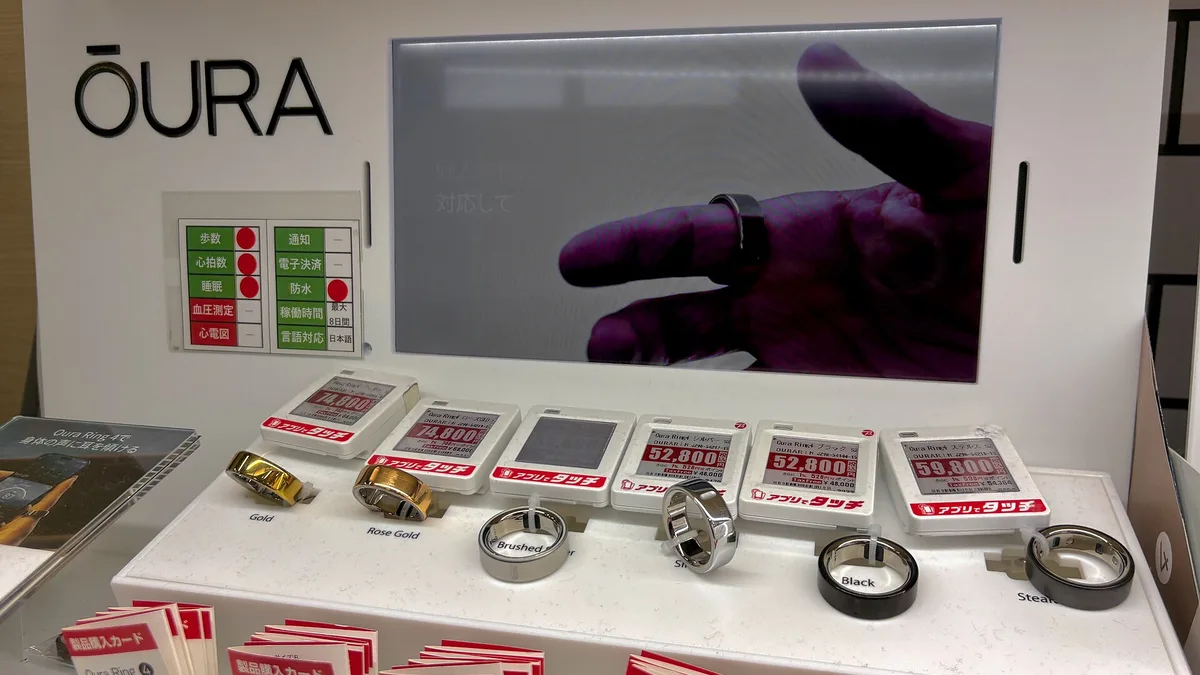
The Oura Ring is a wearable device developed by a Finnish company, Oura Health. The company's origins trace back to the early 2010s in northern Finland, where the founding team initially focused on pioneering non-contact, optical measurement technologies. The development of the ring form factor specifically for health tracking began in the mid-2010s. The first generation Oura Ring was launched to the public in the latter half of the 2010s, following a successful Kickstarter campaign that demonstrated significant consumer interest. This initial release established the core premise of using a ring to provide detailed sleep and recovery insights, a design philosophy that differentiated it from wrist-worn wearables. The company has since iterated on the hardware and software, releasing subsequent generations with improved sensors and expanded tracking capabilities. The product's development is deeply connected to Finnish expertise in both technology and well-being, reflecting a cultural emphasis on practical health solutions.
What it is for
The Oura Ring is designed to be a comprehensive tool for monitoring daily health pillars, specifically sleep, readiness, and activity, to inform sustainable daily practice. Its primary function is to collect physiological data through sensors to provide users with personalized feedback on their recovery status each morning. The device continuously tracks sleep stages, duration, efficiency, and disturbances using photoplemonography and accelerometry. It also monitors daytime heart rate, heart rate variability, and body temperature trends, which are synthesized into a "Readiness" score suggesting how well-prepared the body is for exertion. For movement, it tracks steps, active calorie burn, and provides gentle nudges to stay active, though it is not intended as a primary GPS or intense workout tracker. The overarching aim is to create a feedback loop where data on recovery, movement, and their interrelationship guides users toward more balanced and sustainable health habits without promoting obsessive quantification.
Pros and cons
A significant pro of the Oura Ring is its exceptional sleep and recovery tracking accuracy, which is frequently validated in independent studies and considered by many users to be superior to many wrist-based wearables, especially for heart rate variability and temperature sensing. The discreet, comfortable ring form factor is also a major advantage, as it can be worn continuously without interfering with daily activities or sleep, and its long battery life reduces charging frequency. However, a genuine con is its limited utility for detailed fitness tracking; it lacks GPS, robust workout mode granularity, and a visible screen for real-time metrics during exercise, making it a poor primary device for serious athletes. Many users report that the upfront cost and mandatory subscription for full historical data and insights represent a substantial and ongoing financial commitment, which some regret when they find they do not engage with the data daily. A common mistake is purchasing the ring expecting a comprehensive fitness watch replacement, leading to disappointment when its core strength in recovery is not matched by athletic features. Furthermore, the temperature trend data, while valuable, can sometimes be influenced by environmental factors or ring fit, requiring careful interpretation rather than being taken as an absolute clinical measurement.
Who it suits
The Oura Ring is well-suited for individuals whose primary health focus is on optimizing recovery, sleep quality, and managing stress through detailed physiological insights, rather than on tracking complex workouts. It is particularly appropriate for those who find wrist-worn wearables uncomfortable during sleep or intrusive in professional or social settings, due to its discreet jewelry-like design. People who prefer a holistic, data-informed approach to balancing activity with rest, and who want to understand the impact of lifestyle on their nervous system via heart rate variability, will find its metrics valuable. It also suits users who are responsive to gentle, trend-based guidance rather than competitive fitness goals or social challenges. The ring is less suited for dedicated athletes who require precise GPS mapping, rep counting, or real-time performance metrics during training sessions. It is generally a poor fit for individuals uncomfortable with subscription models or those who do not anticipate regularly engaging with the associated app to interpret their data.