Dumbbell Y-Press Builds Shoulders with Lighter Weights
Men's Health details the Y-press, a shoulder exercise that uses lighter dumbbells by pressing them outwards to increase use and target side delts.
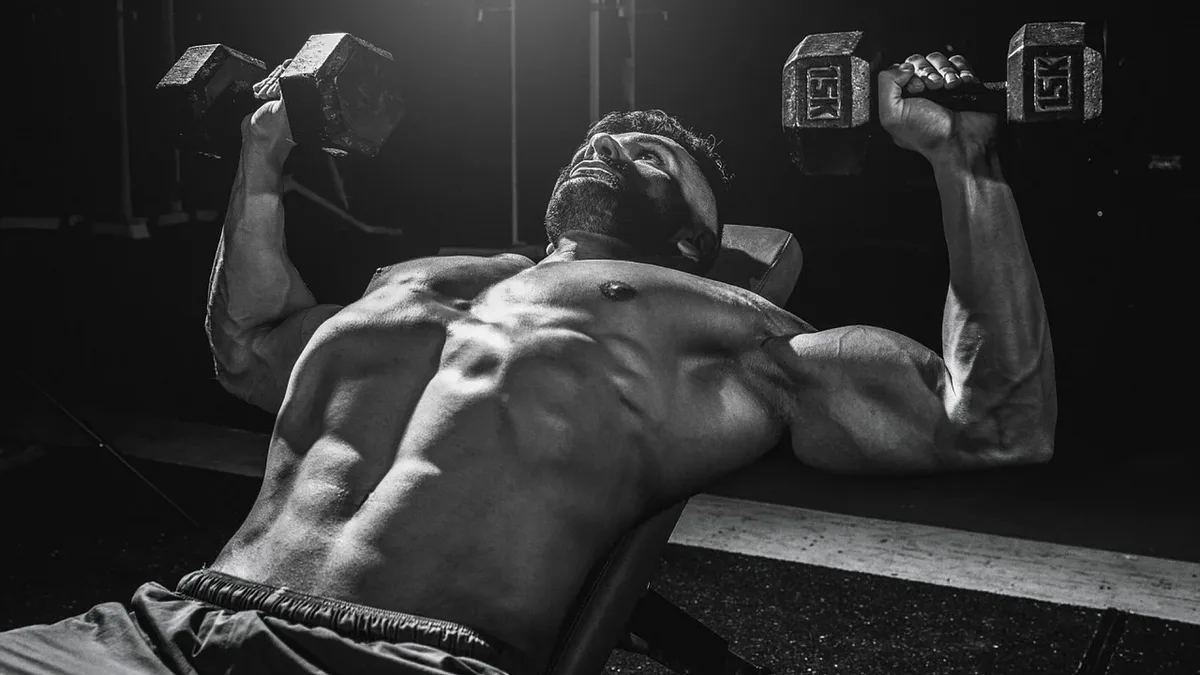
The dumbbell Y-press is a shoulder-building exercise that makes lighter weights feel heavier by altering the pressing path. This movement challenges the deltoids through increased use rather than increased load.
Instead of pressing dumbbells directly overhead, you drive them diagonally upwards and outwards. Your arms finish in a wide 'Y' position. This path places the weights further from your body's center of mass. The longer lever arm means your shoulders work harder against the same weight.
Key Benefits of the Exercise
This use effect is the core benefit. Moving the dumbbells outward increases the moment arm at the shoulder joint. The same weight creates more torque. You can generate significant muscular tension without the heavy loads required for a standard overhead press.
The movement also recruits more of the lateral deltoids. A conventional press heavily involves the front delts and triceps. The Y-press's outward path adds shoulder abduction. This brings the side delts, which create shoulder width, further into the exercise. It acts as a middle ground between an overhead press and a lateral raise.
Constant tension is another advantage. Even at the top of the movement, the weights remain away from the body. They continue to pull the arms down in an arc. This keeps tension on the deltoids throughout the set.
Practical Applications for Training
The Y-press is particularly useful for training around joint issues or with limited equipment. It offers a way to increase shoulder training volume without consistently adding heavy weight. The report suggests it can help if you train at home, in a hotel gym, or simply lack access to heavy dumbbells.
It is not a direct replacement for strength-focused overhead pressing. The article states, "The Y-press isn't a replacement for getting stronger at the conventional overhead press, particularly if maximal strength is your goal." However, for building muscle size, it provides a valuable alternative. The technique allows you to, as the source puts it, "make them feel heavier" if you are stuck with lighter weights.
Muscles Worked and Execution
The primary movers are the shoulder deltoids, with both front and side heads engaged. The triceps assist in elbow extension but contribute less than in a standard press. The upper traps help rotate the shoulder blades upward. The rotator cuff muscles stabilize the joint throughout the movement.
To perform the Y-press, stand or sit holding light dumbbells at shoulder height. Brace your core and glutes. Press the weights diagonally upward and outward until your arms are fully extended in the 'Y' shape. Pause briefly with control, then slowly lower them back along the same path.
Coach's Tips for Effectiveness
Men's Health includes several coaching notes. The key is to maintain the wide 'Y' position and not let the movement degrade into a regular press as fatigue sets in. Avoid arching the back or using leg drive. The value lies in the less advantageous use.
The report suggests a potential technique for extending a set. You can perform a mechanical drop set by finishing your Y-presses and immediately switching to conventional overhead presses with the same weights. This can help squeeze out more muscle growth. The final tip reinforces the philosophy: for building bigger shoulders, not every exercise needs to involve the heaviest possible weight.