Shift Work
| Primary risk | Circadian rhythm disruption |
|---|---|
| Core challenge | Maintaining consistent sleep schedule |
| Typical sleep pattern | Non-24-hour, often split or inverted |
| Key mitigation | Strategic light exposure management |
| Sleep environment priority | Darkness and sound isolation during daytime sleep |
| Original use | Adaptation to non-standard work hours (e.g., industrial, healthcare, emergency services) |
| Common scheduling strategy | Fixed shift blocks over rotating shifts |
Origin and history
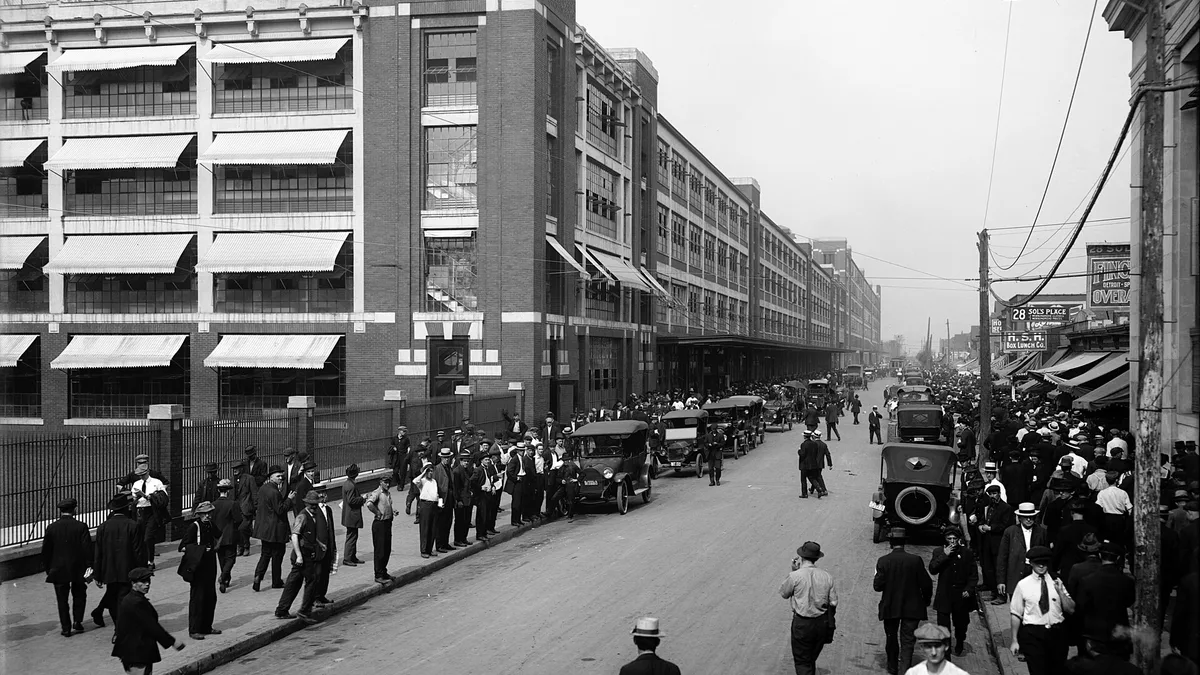
Shift work as a formalized practice originated during the Industrial Revolution in late 18th century Britain. The advent of factory machinery, particularly for textile production, created an economic imperative to operate beyond daylight hours. Early factory owners implemented round-the-clock production schedules to maximize the return on their costly capital investments. This systematic rotation of labor crews marked a decisive break from the agrarian and craft-based work patterns tied to the solar day. The development of artificial lighting, first gas and later electric, was a critical technological enabler for this expansion of the working night. The practice then spread rapidly to other industrializing nations in Europe and North America throughout the 19th century, fundamentally altering the human relationship with sleep and wakefulness.
What it is for
Shift work is an employment practice designed to maintain operational continuity beyond a standard daytime work period. Its primary function is to cover a 24-hour cycle for services deemed essential or for capital-intensive processes where downtime is prohibitively expensive. This includes providing critical public services like healthcare, emergency response, and utilities that a society requires at all hours. In industrial settings, it is used to maximize output from continuous production lines, such as those in chemical manufacturing, steel production, and oil refining. It also supports global economic activities that operate across time zones, including customer support centers and financial trading floors. Furthermore, it caters to the modern demand for extended access to goods, services, and entertainment in sectors like hospitality, retail, and transportation.
Pros and cons
A primary advantage is the economic benefit for both employers, who achieve higher asset utilization, and some employees, who often receive financial premiums for anti-social hours. It provides essential around-the-clock services that modern society depends upon for safety and convenience. For the worker, it can offer greater daytime flexibility for family commitments, education, or avoiding rush-hour commutes. However, the core physiological con is the chronic misalignment between work schedules and the body's endogenous circadian rhythm, governed by the suprachiasmatic nucleus. This leads to persistent sleep deprivation and a condition formally known as Shift Work Sleep Disorder, characterized by excessive insomnia and sleepiness. Common regrets include the strain on social and family relationships due to missing shared meals, weekends, and holidays, leading to a sense of social isolation. A frequent mistake is the attempt to rapidly switch sleep schedules between work blocks and days off, which prevents the body from ever achieving stable circadian entrainment and exacerbates fatigue.
Who it suits
This schedule suits individuals who are naturally more alert in the evening or night hours, sometimes described as having an "evening chronotype." It can be a pragmatic fit for those pursuing education or training during standard daytime hours who require income from employment. Some people actively prefer the autonomy and quiet of night-time work environments, finding them less distracting or bureaucratic. It may also suit individuals with caregiving responsibilities during the day who have a partner available for childcare during their night shifts. Crucially, it requires a person who can rigorously defend their sleep window against daytime social and domestic intrusions, using blackout curtains and sound management. It is generally ill-suited for individuals with existing sleep disorders, strong "morning lark" tendencies, or those who rely heavily on daytime social structures for their mental well-being.
Latest Shift Work news
Latest reporting

Romesh Ranganathan's London Marathon fitness journey
Comedian Romesh Ranganathan, 48, transformed his health, losing 20kg and completing consecutive London Marathons after a mindset shift from vanity to...

Density training builds muscle in less time
Density training offers a time-efficient method for building muscle and strength by increasing work output within fixed time periods.

Dad's marathon personal best of 2:37:13 built on time-efficient training
A father balancing family and work commitments ran a personal best marathon of 2:37:13 at the 2026 Berlin Marathon using structured, time-efficient...

Young Adults Shift Gym Habits to Strength Training
UK young adults are increasingly choosing strength training over cardio, driven by health and physique goals.

Theo James Uses 15-Year Boxing Regimen for Fitness
Actor Theo James, 41, stays fit with a boxing routine coached by Shahzad Ali. It includes skipping, shadowboxing, sparring, pad work, and heavy bag...

A 6-Move Workout for Body Recomposition
A full-body workout from Men's Health combines heavy compound lifts with higher-rep accessory work to support muscle building and fat loss.