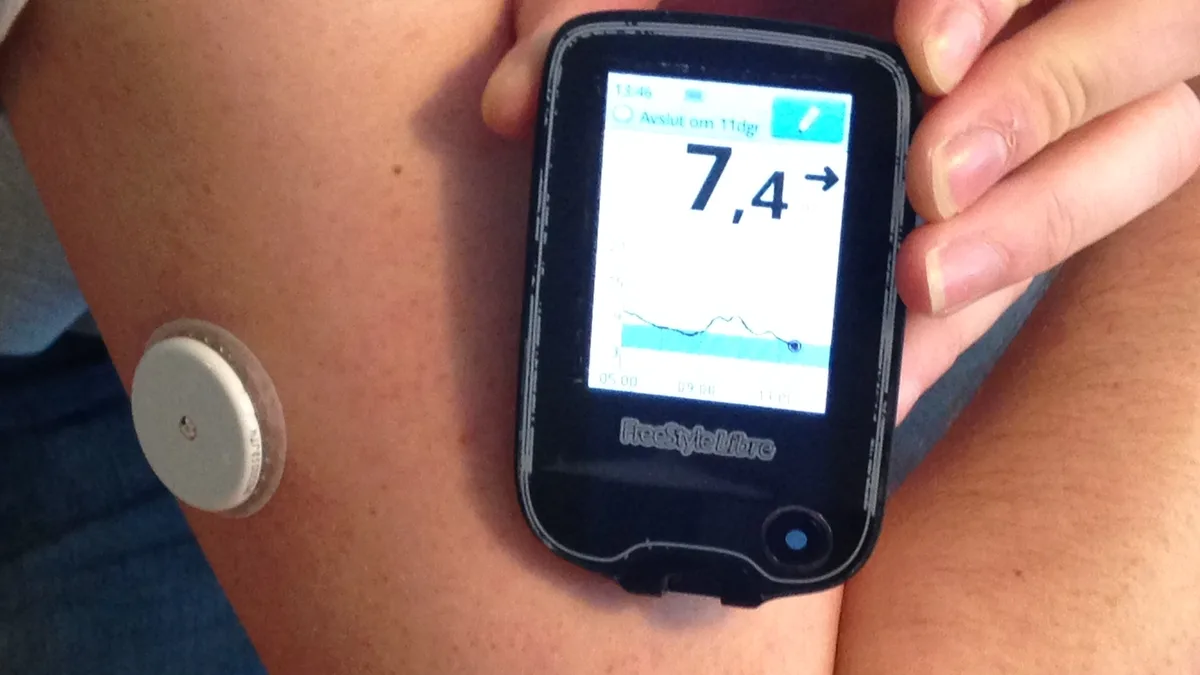
Continuous Glucose Monitors In People Without Diabetes
| Primary user group | People without diagnosed diabetes |
|---|---|
| Original use | Medical device for diabetes management |
| First documented (decade precision) | 1990s |
| Regulatory status | Prescription-only in many jurisdictions |
| Typical wear duration | 10 to 14 days per sensor |
| Measured analyte | Interstitial fluid glucose |
| Data output | Real-time readings and trend graphs |
| Common goal of use | To observe personal glycemic responses to diet and lifestyle |
Origin and history
Continuous Glucose Monitors (CGMs) were developed for medical use in people with diabetes, with the first devices approved for this purpose in the late 1990s and early 2000s. The practice of using CGMs in people without diagnosed diabetes emerged much later, gaining notable traction in the 2010s. This shift originated primarily in the United States, driven by the wellness and biohacking movements. It was propelled by direct-to-consumer marketing from companies making the sensors available without a prescription. The concept leveraged existing medical technology, repurposing it for general health and lifestyle optimization rather than disease management. This practice has no single inventor but evolved from the convergence of accessible technology, interest in personalized nutrition, and a focus on metabolic health.
What it is for
The stated purpose of using a Continuous Glucose Monitor for individuals without diabetes is to observe personal glycemic responses to diet, lifestyle, and stress. Practitioners aim to identify foods or meal combinations that cause significant or rapid spikes in blood glucose, known as glucose excursions. It is used as a tool to explore individual metabolic flexibility, which is the body's ability to efficiently switch between using glucose and fat for fuel. The data is intended to inform dietary choices, meal timing, and exercise routines to promote more stable energy levels throughout the day. Some users adopt it to investigate correlations between glucose levels and subjective feelings like brain fog, fatigue, or cravings. Ultimately, the practice is framed as a method for gathering personalized biometric data to guide decisions within a sustainable health practice.
Overview
A Continuous Glucose Monitor is a wearable device that measures glucose levels in interstitial fluid, providing near-real-time readings via a smartphone app. For non-diabetic use, individuals typically wear a sensor, often on the back of the arm, for a period of one to two weeks to collect data. The resulting data stream shows glucose levels continuously, revealing patterns in response to meals, sleep, exercise, and stress events. Users do not use this data for making therapeutic insulin decisions but rather for observational and educational insights. The practice involves logging food intake, activity, and other variables to interpret the glucose trends in a personal context. It represents a form of self-quantification, integrating a specific physiological metric into a broader health and wellness framework.
What to know
CGM readings for individuals without diabetes exist in a different context than for those with diabetes, where values are assessed against clinical targets. Normal, non-diabetic glucose ranges are much narrower, and fluctuations after meals are expected and healthy. The accuracy of CGMs, while high, has a margin of error that can be significant when interpreting small fluctuations within the normal range. Data interpretation requires understanding that a single "spike" is not inherently harmful and that the body's insulin response normally manages it effectively. The practice can lead to an excessive focus on micromanaging glucose at the expense of overall dietary quality and enjoyment of food. It is also crucial to know that these devices are not diagnostic tools and cannot identify conditions like prediabetes or insulin resistance without proper medical testing.
Common questions
A common question is whether seeing glucose spikes from healthy foods like fruit or oatmeal means those foods are bad, which is not the case as the body is designed to handle such rises. People often ask how exercise affects readings, with aerobic activity typically lowering glucose and high-intensity exercise sometimes causing a temporary rise due to stress hormones. Many wonder about the impact of meal order, such as eating vegetables or protein before carbohydrates, which can often blunt the glucose rise of a meal. Users frequently question the difference between interstitial fluid glucose readings and traditional fingerstick blood glucose measurements, noting there is a slight lag with the CGM. Concerns arise about the safety and pain of sensor insertion, though most modern devices are minimally invasive and designed for easy self-application. Individuals also ask if this practice is necessary for everyone, which most healthcare professionals would argue it is not, as it provides data without established clinical guidelines for action in healthy populations.
Pros and cons
A potential benefit is increased awareness of how one's body responds to different foods and lifestyle factors, which can motivate positive dietary changes. The concrete data can help identify surprising personal triggers for energy crashes or cravings, leading to more stable energy. A significant con is the risk of developing orthorexic tendencies or an unhealthy fixation on perfect glucose numbers, potentially creating anxiety around eating. The data can be easily misinterpreted by those without medical training, leading to the unnecessary elimination of nutritious foods that cause a normal glycemic response. Many users regret the cost, as the practice is typically not covered by insurance for non-diabetic use and represents a recurring expense for observational data. A common mistake is over-interpreting single data points or short-term trends without considering the broader context of overall diet, stress, and sleep patterns.
Who it suits
This practice may suit highly data-motivated individuals who enjoy self-experimentation and find quantitative feedback reinforcing for lifestyle changes. It can be appropriate for athletes or those with specific performance goals who wish to fine-tune fuel timing and composition around training. Individuals with a family history of metabolic disease who are proactively investigating their personal responses, while understanding the device's limitations, might find it informative. It is less suitable for individuals with a history of disordered eating or anxiety, as the constant feedback can exacerbate these conditions. People seeking simple, general health advice without a desire for intensive self-monitoring will likely find this practice unnecessarily complex. It suits those who view the data as one piece of a larger puzzle, not a definitive scorecard for health, and who can integrate the information without it dictating their relationship with food.
Latest Continuous Glucose Monitors In People Without Diabetes news
Latest reporting

Stair Climbing Reduces Death Risk by 24% in Major Study
A study of nearly half a million people found regular stair use cuts cardiovascular death risk by 39% and all-cause mortality by 24%, offering a...
Richard Osman Finds Fitness Through Pilates at 55
TV presenter Richard Osman, 55, credits Pilates for transforming his approach to fitness, providing strength and flexibility without traditional gym

Bodyweight Exercises Build Shoulder Muscle Without Weights
Men's Health details 12 bodyweight exercises for building shoulder muscle, highlighting handstand push-ups as the most potent but offering scalable

Wall Walks Build Shoulder Strength Without Weights
A bodyweight exercise called the wall walk can build serious shoulder strength and overhead stability at home, requiring only a wall.
10 Kettlebell Chest Exercises for Home Muscle Building
Men's Health details ten kettlebell exercises targeting chest development, demonstrating how the tool can build muscle without traditional swings.

Ray Winstone Puts Diabetes in Remission with Walking and No
Actor Ray Winstone, 69, says he reversed his type 2 diabetes diagnosis by quitting alcohol and sugary drinks and adopting daily walking as his primary