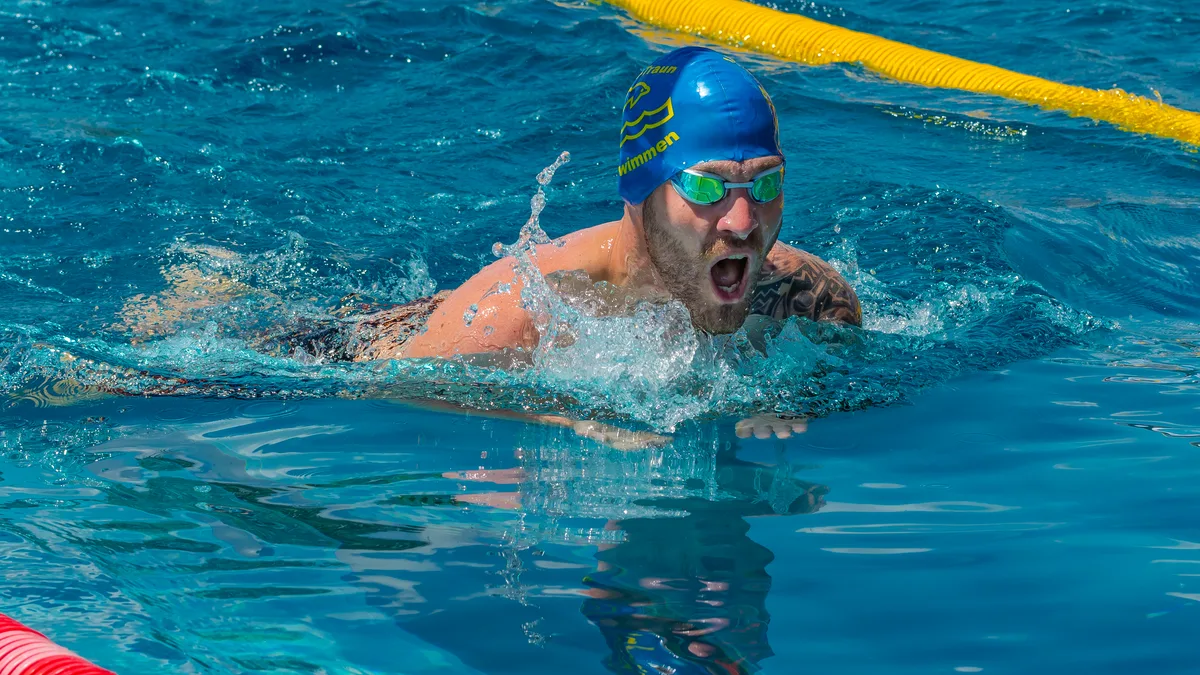
Swimming
| Activity type | Cardiovascular and resistance exercise |
|---|---|
| Primary muscle groups | Full body |
| Water temperature range | 25–28°C (77–82°F) for lap swimming |
| Common session duration | 30 to 60 minutes |
| Caloric expenditure | Moderate to high |
| Skill requirement | Beginner to advanced |
| Recovery demand | Low to medium |
| Equipment required | Swimsuit, goggles, access to pool or open water |
Origin and history
Swimming as a human activity has prehistoric origins, with the earliest evidence of swimming depicted in cave paintings from the Neolithic period, approximately 10,000 years ago, in what is now the Egyptian part of the Sahara. Organized swimming as a practice for health and sport finds early documentation in ancient civilizations, with written references appearing in texts from Greece and Rome over two millennia ago. The first recorded swimming races as organized competitions took place in Japan in the early 17th century, under imperial decree. The modern development of swimming strokes and its establishment as a formal sport largely occurred in Great Britain during the 19th century, with the founding of the first swimming societies and the standardization of strokes like the front crawl. This period also saw the construction of the first public indoor swimming baths, moving the practice from natural bodies of water into dedicated civic facilities. The inclusion of swimming in the first modern Olympic Games in 1896 cemented its status as a global athletic and recreational pursuit.
What it is for
Swimming serves as a form of total-body conditioning that develops muscular strength, cardiovascular endurance, and pulmonary capacity through rhythmic, resisted movement. It is a primary method for improving aerobic fitness while imposing minimal impact stress on the skeletal joints, making it a cornerstone of injury rehabilitation and lifelong mobility. The practice is utilized for weight management by providing a high-calorie expenditure activity that can be sustained for extended durations. Swimming is also employed as a critical life skill for water safety and survival, reducing the risk of drowning through competency and confidence in aquatic environments. Furthermore, the sensory experience of immersion and rhythmic breathing makes it an effective practice for acute stress reduction and mental recovery. Its versatility allows it to be tailored for purposes ranging from competitive speed and technical mastery to gentle therapeutic movement and meditative flow.
Overview
Swimming is the act of propelling oneself through water using coordinated movements of the limbs and torso, typically without artificial aids. The practice is defined by several standardized strokes, including freestyle (front crawl), backstroke, breaststroke, and butterfly, each with specific technical rules governing body position, arm recovery, and kick patterns. A session is conducted in a body of water such as a pool, lake, or ocean, with distance, intensity, and stroke selection determining the specific physiological and skill demands. Proper swimming requires the integration of breathing techniques synchronized with stroke cycles, which is a fundamental technical challenge for beginners. Beyond lane swimming, the broader practice encompasses water-based activities like aqua jogging, therapeutic water exercises, and synchronized swimming, all leveraging the properties of water for resistance and buoyancy. Mastery involves progressive development of efficiency, or "feel for the water," to minimize drag and maximize propulsion with each movement.
What to know
Water provides approximately 800 times more resistance than air, meaning every movement in swimming engages multiple muscle groups for both propulsion and stabilization against this dense medium. The buoyancy of water supports a significant portion of body weight, effectively unloading the joints of the spine, hips, knees, and ankles, which is why it is a default recommendation for individuals with arthritis or recovering from impact injuries. Breathing is a constrained, technical skill in swimming, as inhalations must be timed precisely within a limited window during the stroke cycle, often leading beginners to hold their breath or hyperventilate. Consistent progress relies heavily on technique over brute strength; inefficient form creates excessive drag and quickly leads to fatigue, regardless of an individual's fitness on land. Chlorine and other pool chemicals can dry skin and hair, and may irritate the eyes and respiratory passages of sensitive individuals, making post-swim rinsing and moisturizing a necessary part of the routine. Access to a suitable, safe body of water is a primary logistical requirement, involving factors like pool membership, open-water safety knowledge, or travel, which can be a barrier to consistent practice.
Common questions
Is swimming an effective exercise for building muscle mass compared to weight training? While swimming builds muscular endurance and lean strength, the constant, sub-maximal resistance of water is generally less effective for inducing significant hypertrophy than progressive overload with heavy weights on land. How often should one swim to see fitness improvements? For general fitness, swimming two to three times per week allows for sufficient stimulus and recovery, though competitive swimmers will train daily with varied intensity and volume. Can you lose weight by swimming regularly? Yes, swimming can contribute significantly to a calorie deficit, but dietary habits remain paramount, and some individuals experience an increased appetite post-swim that requires mindful management. Do you need to take lessons as an adult to swim properly? Adult lessons are highly recommended, as self-taught swimmers often develop ingrained technical flaws that limit efficiency, speed, and endurance, which are difficult to correct later. What is the best stroke for beginners? The breaststroke or backstroke are often taught first, as they allow the head to remain above water for easier breathing, though freestyle is the most efficient for covering distance once breathing is mastered. How long does it take to become a proficient swimmer? Proficiency for consistent lap swimming varies widely, but with regular instruction and practice, an adult beginner can often achieve a basic level of endurance and technique within several months.
Pros and cons
It engages nearly all major muscle groups symmetrically, promoting balanced strength development and improved postural alignment. The cooling effect of water prevents overheating during intense effort and provides a unique sensory environment that many find meditative and stress-relieving. A significant drawback is the high technical barrier to entry; inefficient technique leads to rapid exhaustion and frustration, making quality instruction almost mandatory for progress beyond a basic level. The logistical hurdles of accessing a pool or safe open water, along with the time required for changing, showering, and drying, can reduce adherence compared to more accessible forms of exercise. Common mistakes include neglecting kick technique, which stabilizes the body, or holding one's breath instead of exhaling continuously underwater, both of which waste energy. Individuals often regret choosing swimming as their sole form of exercise if they primarily seek maximal strength gains or bone density improvement, as it lacks the skeletal loading of weight-bearing activities.
Who it suits
Swimming is exceptionally well-suited for individuals rehabilitating from injuries, particularly those affecting the knees, hips, or back, who require maintained cardiovascular fitness without joint loading. It is ideal for athletes seeking cross-training to improve aerobic capacity and muscular endurance while giving their primary impact structures a complete rest. People with a high sensitivity to heat or those exercising in hot climates benefit from swimming's inherent cooling mechanism, allowing for longer, more comfortable training sessions. The practice suits those who enjoy rhythmic, repetitive motion and find a meditative quality in the focus required on breath and stroke timing, serving as a moving meditation. It is a strong match for individuals who appreciate a technical challenge and derive satisfaction from the continuous process of refining efficiency and "feel" in a skill-based activity. Conversely, it is less suited for those with a primary goal of maximizing muscle size or raw strength, for individuals with severe chlorine allergies or aquaphobia, or for people who require the immediate convenience and minimal preparation of a home-based workout.