NHS offers HPV home-test kits
The NHS is offering HPV self-testing kits to nearly four million women in England who have missed cervical screening appointments.
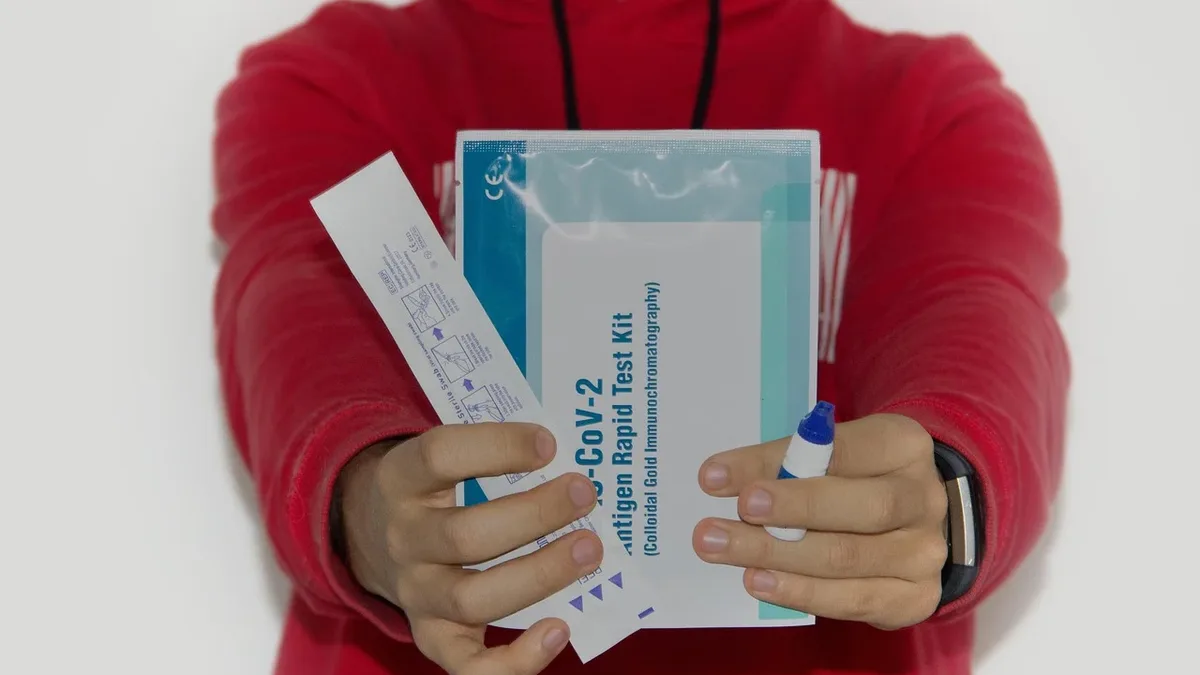
Nearly four million women in England who have missed a cervical screening appointment will be offered a free HPV self-testing kit to use at home. The NHS will send invites via the NHS App, text, email, or letter over the next year, targeting the roughly one-third of eligible women who have not recently participated in screening.
The self-testing kits are designed to increase checks for high-risk HPV, the virus responsible for nearly all cervical cancer cases. Dr. Sue Mann, the national clinical director for women's health, stated that offering this home-based alternative will be a "game-changer." She cited common barriers like embarrassment, lack of time, or worries about discomfort, noting the kits provide a discreet and convenient option to encourage more women to take the test.
How the home-testing kits work
The kit contains a swab, similar to a long cotton bud, for collecting a vaginal sample. Users send the sample back to the NHS for analysis. If high-risk HPV is detected, the individual will be invited to book a follow-up cervical screening appointment with a clinician. It is important to note that finding high-risk HPV increases the risk of cervical cancer but does not mean a woman will automatically develop the disease.
Health Secretary Yvette Cooper emphasized the preventable nature of cervical cancer, stating the goal is to make screening "as easy and convenient as possible." The NHS maintains that a screening appointment with a clinician is still the best prevention method, and women who have missed an appointment can still come forward for one.
Personal impact and future goals
Gem Sofianos-Boorman, 39, shared her experience to highlight the importance of screening. Diagnosed with cervical cancer at 28 after a routine screening, she was young, healthy, and had no symptoms. She underwent surgery to remove cancerous cells and lymph nodes. "Looking back, I truly believe that going to my screening appointment saved my life," she said. "My cancer was found early, which allowed me to have treatment before it spread."
Cervical cancer often presents no symptoms until the disease is advanced and harder to treat. Trials of self-testing in London suggest the approach could encourage one in 10 previously non-participating women to come forward, potentially boosting annual uptake by around 400,000. Other parts of the UK are also considering introducing self-testing.
Women aged 24 to 64 are invited for cervical screening every five years, or more frequently if HPV is detected. The NHS aims to eliminate cervical cancer by 2040 through a combination of HPV vaccination for teenagers and improved screening programs. The final message from the health service is clear: if you receive an invite for screening or a self-testing kit, please do not ignore it.